2026 How to Choose the Best Peptide Synthesizer Machine?
In recent years, the demand for peptide synthesizers has surged due to advancements in biotechnology. The peptide synthesizer machine market is projected to grow at a CAGR of 10% from 2021 to 2026, indicating a substantial increase in interest among researchers and pharmaceutical companies. This growth signifies the importance of choosing the right peptide synthesizer machine for specific needs.
Selecting the best peptide synthesizer machine requires a thorough understanding of multiple factors. Key considerations include the machine's capacity, ease of use, and the precision of synthesis. Many machines provide varying levels of automation, from fully automated systems to manual setups. It's crucial to analyze the trade-offs between higher costs and additional features. Some machines might offer advanced capabilities, which could be unnecessary for smaller projects.
Furthermore, regular user feedback often highlights the necessity of maintenance and the potential learning curve associated with sophisticated systems. While manufacturers boast high performance, actual user experiences can differ. Engaging with professional reviews and industry reports will ensure that your choice is informed by reliable data, maximizing productivity in peptide synthesis.
Understanding Peptide Synthesis and Its Applications
Peptide synthesis plays a crucial role in modern biochemistry and pharmaceutical development. It allows scientists to create peptide chains that can act as hormones, enzymes, or even therapeutic agents. Understanding the different methods of synthesis is essential for researchers aiming to innovate in drug discovery and development. The precision in peptide synthesis affects the resulting compound's efficacy and safety.
Specific applications of peptides range from drug delivery systems to the development of vaccines. Each application requires a unique approach in the synthesis process. While solid-phase synthesis is popular for its efficiency, liquid-phase methods provide more flexibility for complex sequences. Researchers must weigh these factors when choosing the appropriate synthesis method.
Moreover, the choice of synthesizer impacts the outcome. Machines vary in their capabilities and limitations. Users often encounter challenges such as synthesis errors or scaling up processes. Reflecting on these experiences is vital for improvement. It invites a deeper understanding of both the technology and the science of peptides. Hence, selecting the right tools and methods requires careful consideration and ongoing learning.
Key Features to Consider in a Peptide Synthesizer
When choosing a peptide synthesizer, key features play a crucial role. First, consider synthesis scale. Machines come in different capacities, impacting batch sizes. Smaller labs may require compact devices, while larger facilities benefit from high-throughput models. Data from the American Chemical Society shows that scalable synthesizers can enhance productivity by up to 30%.
Another essential aspect is the synthesis method. Solid-phase peptide synthesis (SPPS) is the most common. Advanced machines offer automated functionality, allowing greater precision and efficiency. A report from the European Peptide Society highlights that automation reduces error rates, improving overall synthesis quality. Look for systems with user-friendly interfaces. This improves workflow, especially for teams with varying expertise levels.
Temperature control and solvent management are also critical. Proper temperature regulation can significantly affect yield and purity. Furthermore, solvent organization minimizes waste and maximizes resource efficiency. A notable survey indicates that 40% of research labs face challenges in solvent management. Addressing these issues can lead to better results and reduce operational costs.
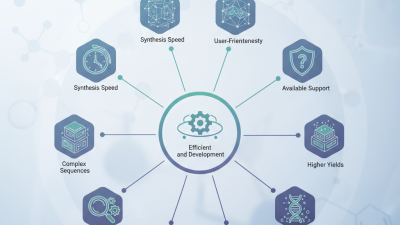
Comparison of Key Features in Peptide Synthesizer Machines (2026)
Evaluating the Technology Behind Peptide Synthesizers
When evaluating the technology behind peptide synthesizers, it’s vital to understand the different synthesis methods available. Solid-phase synthesis, for instance, allows for efficient coupling of amino acids. This method streamlines the separation process and minimizes impurities. Analyzing how these systems handle reactions is crucial. Look for machines that provide precise temperature control and mixing capabilities. Variability in these factors can greatly influence the yield and purity of your peptides.
Another key aspect is the software used in peptide synthesizers. User-friendly interfaces can enhance productivity. Automated features help reduce human error, which is often a concern in complex synthesis processes. Insights into software reliability and support are important. Machines with robust troubleshooting features allow users to identify issues quickly. There's always a learning curve, and the operational ease can vary significantly among models.
Furthermore, consider the support system provided by manufacturers. Access to knowledgeable technical support can be a game changer when issues arise. Industries often face unexpected challenges during synthesis. Companies that prioritize customer training and post-sale service stand out. Reflecting on these factors aids in making a well-informed choice. Balancing technology with practical application will yield the best results in peptide synthesis.
Cost Analysis: Budgeting for a Peptide Synthesizer Machine
Investing in a peptide synthesizer machine can seem daunting. Understanding cost factors is crucial in making an informed decision. Budget ranges can vary widely. Basic models might start at a few thousand dollars. Advanced systems can exceed tens of thousands. Researching thoroughly is essential to grasp what your budget can cover.
Consider not just the purchase price, but also maintenance costs. Regular servicing and potential upgrades can add to expenses. Costs associated with consumables, like reagents and solvents, also matter. Over time, these can become significant. For small labs, a compact, lower-cost model might be more practical. Larger operations may require sophisticated machines with higher initial investment.
Always remember, affordability doesn’t equate to quality. A cheaper machine might lead to higher costs in the long run due to inefficiencies. Be wary of overspending on unnecessary features. This can limit funds for essential components. Careful planning helps navigate these challenges effectively. Reflecting on your lab’s specific needs is vital in avoiding costly mistakes.
Assessing Support and Maintenance for Your Synthesizer
When choosing a peptide synthesizer, support and maintenance are crucial factors. A reliable support system can save you time and frustration. Check if the manufacturer provides 24/7 technical support. This ensures help is available when issues arise. Investigating the availability of replacement parts is also vital. Delays in obtaining parts can halt vital research.
Maintenance services should not be overlooked. Some synthesizers require regular calibration and cleaning. Understanding these requirements will help you plan your resources effectively. A maintenance contract might seem expensive, but it could prevent larger costs and delays later. Don’t ignore user reviews regarding the support experience. Feedback from other users can reveal hidden strengths and weaknesses of a supplier’s service.
The training for your team is another essential aspect. Some companies offer training sessions for users, ensuring everyone is knowledgeable about the machine's operations. This can significantly reduce errors during synthesis. Reflect on your team's expertise in this area as well. Sometimes, investing in better training can yield more reliable results than the latest technology.