Choosing among China’s top high-performance HPLC machine suppliers requires more than comparing prices. Laboratories need dependable separation, stable pressure control, accurate detection, and responsive technical support. The right supplier should match the instrument to real testing conditions, not simply present attractive specifications.
A High Performance Liquid Chromatography Machine may support pharmaceutical quality control, food analysis, environmental testing, or academic research. Each application creates different demands. For example, a pharmaceutical laboratory may need precise autosampling and strong data integrity. A food laboratory may prioritize flexible detectors and easy maintenance. Important evaluation points include pump precision, injection repeatability, column compatibility, software usability, validation support, and spare-parts availability.
Details matter. Ask whether engineers can diagnose pressure fluctuations remotely. Check how quickly common seals, lamps, and tubing can be delivered. Request application data using samples similar to yours. A polished brochure is useful, but it cannot replace verified performance records. Supplier experience should be supported by certifications, documented testing, customer references, and clear warranty terms.
No supplier list is perfect. Product quality can vary between models, distributors, and production periods. That uncertainty deserves attention. Buyers should compare total ownership costs, training arrangements, installation conditions, and local service capability before making a decision. Some evaluations may overlook software learning time or routine maintenance. That is a weakness worth correcting. A reliable comparison should remain practical, transparent, and evidence-based, helping laboratories identify equipment that performs consistently beyond the showroom.
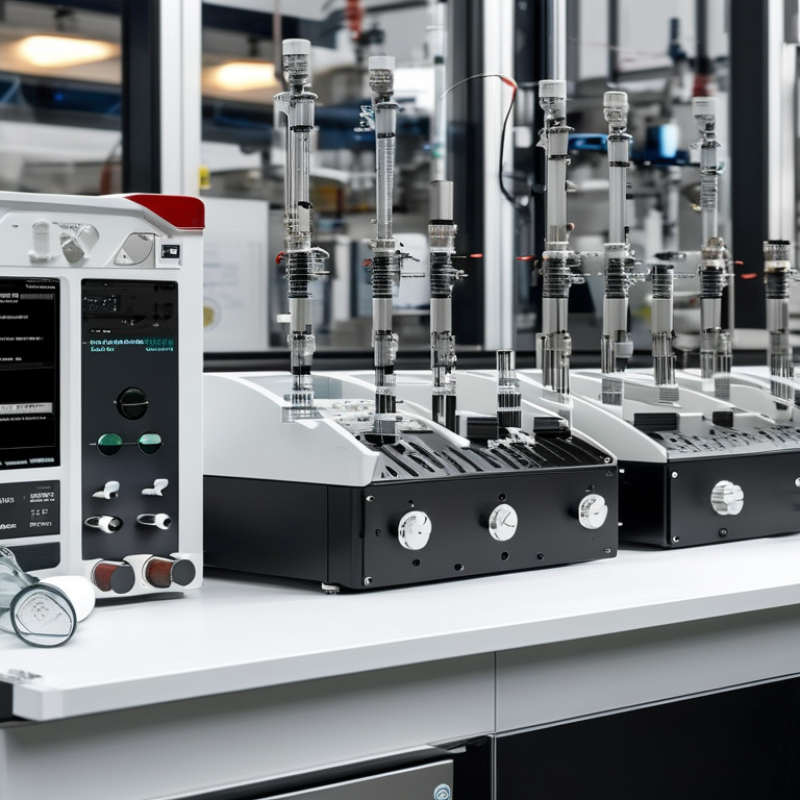
China’s HPLC supplier landscape now covers systems rated from 400 to 1,300 bar. The pressure rating often signals the instrument’s intended workload. A 400-bar system suits routine quality control and standard analytical columns. Systems near 600 bar offer more flexibility for shorter columns and faster runs. High-pressure platforms from 800 to 1,300 bar support demanding UHPLC methods, but they require better solvent preparation and stricter maintenance.
In practical evaluations, I check pressure stability before chasing headline specifications. A smooth baseline matters more than a high maximum number. Inspect the pump seals, injector design, degassing path, detector sensitivity, and column oven control. Ask for pressure-ripple data under realistic flow rates. Request test chromatograms with clear sample details. A supplier should also provide calibration records, installation guidance, spare-part availability, and responsive technical support.
The cheapest quote can become expensive after repeated seal changes or delayed service. That lesson is easy to underestimate. Some suppliers describe peak pressure without explaining continuous operating limits. This creates uncertainty. Buyers should compare warranty terms, software compatibility, training, and local service capacity. A factory video is useful, but it cannot replace a witnessed acceptance test. I would also leave room for doubt: published performance may change with solvent viscosity, temperature, and column dimensions. A careful comparison uses the same method, flow rate, and test mixture across every shortlisted system.
Leading Chinese HPLC manufacturers increasingly focus on pumps, autosamplers, and UV detectors. According to MarketsandMarkets’ HPLC Market report, the global market was valued near USD 5.6 billion in 2023. It is projected to grow steadily through 2028, supported by pharmaceutical testing and quality control. Market estimates vary, however. Buyers should check the original methodology before making investment decisions.
Chinese suppliers now offer binary and quaternary pumps with low-pulsation flow control. A practical evaluation should include pressure stability, gradient accuracy, solvent compatibility, and service access. Autosamplers need consistent injection volumes and low carryover, especially for trace analysis. UV detectors should provide stable baselines, suitable wavelength accuracy, and fast data collection. Small details matter. A poorly matched detector can weaken an otherwise reliable method.
Tips: Request raw test data, not only brochure specifications. Ask for carryover results, pump ripple data, and lamp-life records. Test the system with your real columns and solvents. ISO 17025 guidance supports documented calibration and measurement control, but daily laboratory habits still influence results. I have found that installation support is often underestimated. The cheapest quotation may become expensive after downtime, training, and replacement parts.
For high-performance HPLC systems, the useful comparison starts with measurable control, not attractive catalog language. A practical supplier should demonstrate stable flow from 0.1 to 10 mL/min. This range supports narrow-bore methods and routine analytical columns. At low flow, even small pulsations can affect retention time and peak shape. At higher flow, pressure control becomes equally important.
Ask for test data showing ≤0.1% RSD under defined conditions. The supplier should state whether RSD refers to peak area, retention time, or injection volume.
A credible test uses repeated injections, a documented analyte, and recorded temperature conditions. Check the pump design, solvent degassing, mixer volume, injector precision, and pressure monitoring. These details often explain results better than a single specification.
Real laboratory experience also requires testing beyond the brochure. Request raw chromatograms and maintenance records when possible. Confirm performance with your own column, solvent, and sample matrix. A system may reach 0.1% RSD with a simple standard but perform differently with complex samples. That matters. Supplier engineers should explain calibration intervals, leak checks, spare-part access, and software audit trails clearly. Some published values may reflect ideal conditions. Treat them as starting points, not guarantees. A short on-site or remote acceptance test can reveal pressure ripple, carryover, and flow instability before purchase.
China Top High Performance HPLC Machine Suppliers?
Detector Selection: UV–Vis Coverage from 190 to 800 nm
When comparing high-performance HPLC suppliers, UV–Vis coverage from 190 to 800 nm deserves careful testing. This range spans deep ultraviolet, visible wavelengths, and many routine pharmaceutical applications. A deuterium lamp usually supports the lower range, while a tungsten source covers visible detection. The transition must remain stable, not merely appear in a specification sheet. Grand View Research estimated the global HPLC market at approximately USD 4.8 billion in 2023, reflecting strong demand for reliable analytical systems. However, market growth does not guarantee detector quality.
At 190 nm, solvent absorption becomes a practical concern. Acetonitrile absorbs strongly below about 190 nm, while methanol usually requires higher wavelengths. Small baseline movements can obscure low-level peaks. I have found that real-world noise, lamp aging, and cell cleanliness often matter more than impressive resolution claims. USP General Chapter <857> emphasizes wavelength accuracy and photometric performance, but laboratories should still verify these factors during acceptance testing. A broad range is useful. It is not automatically accurate.
Tips: Request chromatograms at 190, 220, 254, and 800 nm. Check baseline noise with the actual mobile phase. Ask for wavelength accuracy records, lamp-life data, and calibration procedures. Do not rely only on factory test charts. One overlooked detail can affect months of routine results.
| Detector Configuration | Typical Wavelength Coverage | Light Source | Typical Spectral Bandwidth | Typical Wavelength Accuracy | Typical Noise and Drift | Data Collection Capability | Best-Fit Applications | Selection Considerations |
|---|---|---|---|---|---|---|---|---|
| Variable-Wavelength UV–Vis Detector | 190–600 or 800 nm | Deuterium lamp for the UV region; tungsten or tungsten-halogen support may be included for the visible region | Typically 4–8 nm, depending on optical design | Typically ±1 nm | Low noise and drift under stable flow, temperature, and lamp conditions | One selected wavelength at a time; some systems support time-programmed wavelength changes | Routine assays, pharmaceuticals, food analysis, environmental testing, and quality control | Cost-effective and simple to operate; confirm that the selected model provides continuous coverage through 800 nm if visible-range detection is required |
| Dual-Wavelength UV–Vis Detector | 190–800 nm | Usually a deuterium lamp, with a tungsten-halogen source for extended visible-range operation | Typically 4–8 nm | Typically ±1 nm | Designed for stable quantitative measurements at two monitored wavelengths | Simultaneous monitoring of two wavelengths; useful for analyte and reference-channel measurements | Impurity monitoring, gradient methods, derivatized compounds, and methods requiring reference-wavelength correction | Offers more information than a single-wavelength detector without the full complexity of a photodiode-array system |
| Photodiode-Array Detector (PDA) | 190–800 nm | Deuterium and tungsten-halogen lamps are commonly used to cover ultraviolet and visible wavelengths | Typically 1–8 nm, depending on slit and optical configuration | Typically ±1 nm | Typical specification ranges are approximately 0.5–2 × 10⁻⁵ AU noise and 1–5 × 10⁻⁴ AU/h drift, depending on conditions | Acquires a wavelength spectrum across the detector range for every chromatographic data point | Peak-purity evaluation, spectral library comparison, impurity profiling, method development, and stability studies | Strongest general-purpose choice when both quantitative results and spectral information are required; verify detector resolution and data rate |
| Diode-Array Detector with Extended Visible Range | 190–800 nm or wider | Dual-lamp UV–Vis optical system, normally combining deuterium and tungsten-halogen sources | Typically 1–4 nm for higher spectral resolution models | Typically ±1 nm or better | Low-noise performance depends on slit width, lamp age, flow-cell design, and sampling rate | Full three-dimensional chromatographic data: absorbance, wavelength, and time | Colored compounds, chromophore studies, multi-component analysis, biopharmaceutical impurity assessment, and advanced method development | Choose this configuration when analytes absorb above 400 nm or when spectral matching across the visible region is important |
| Fixed-Wavelength UV Detector | Commonly 214, 254, or 280 nm | Low-pressure mercury lamp or a dedicated UV light source, depending on the selected wavelength | Fixed optical bandwidth optimized for the designated wavelength | Optimized around the fixed wavelength | Can provide stable, sensitive routine detection when the method uses a known absorption maximum | Single-wavelength signal only | Established QC methods, peptide detection near 214 nm, aromatic analytes near 254 nm, and protein monitoring near 280 nm | Usually unsuitable when method development, spectral confirmation, or detection anywhere across 190–800 nm is required |
| UV–Vis Detector with Long-Path Flow Cell | Typically 190–800 nm | Deuterium and tungsten-halogen lamps | Typically 4–8 nm for variable-wavelength operation | Typically ±1 nm | May improve sensitivity for low-concentration analytes, although flow-cell volume and extra-column effects must be considered | Single- or dual-wavelength monitoring; PDA versions may also be available | Low-level impurity analysis, dilute samples, and applications requiring increased optical path length | Higher sensitivity can be offset by increased cell volume, possible peak broadening, and greater sensitivity to bubbles or solvent mismatch |
China’s high-performance HPLC machine suppliers should be judged by quality systems, not brochure claims. ISO 9001 certification can show controlled design, manufacturing, inspection, and corrective-action processes. Ask for the certificate number, scope, issuing body, and current validity date.
For pharmaceutical laboratories, GMP alignment matters during installation, calibration, cleaning, and maintenance. A reliable supplier should provide IQ/OQ documentation, calibration records, traceable standards, and change-control procedures. 21 CFR Part 11 support also deserves close inspection. Check user access levels, audit trails, electronic signatures, data backup, and protection against unauthorized data changes. Software screenshots are useful, but practical demonstrations are stronger evidence.
Tips: Request a sample audit-trail report. Review one complete service record. Test whether deleted or modified results remain traceable. Confirm that local engineers understand regulated workflows, not only instrument repairs. Some suppliers provide excellent hardware but weak documentation. That gap can delay validation. I would also verify response times with recent customers, because a promised service level may not match an emergency call. Keep every commitment in the technical agreement, including spare parts, software updates, training, and preventive maintenance intervals.
The chart shows the publication or effective year of key quality and computerized-system compliance frameworks commonly reviewed when evaluating HPLC equipment suppliers. These frameworks are reference points for supplier qualification and do not represent certification of any individual company.