Selecting among the top Lyophilization Equipment Manufacturers requires more than comparing glossy brochures. It requires understanding process risk, product sensitivity, and long-term service quality. A vial may appear dry, yet hidden moisture can damage potency, structure, or shelf life. Small differences matter.
Dr. Michael J. Pikal, a respected pharmaceutical scientist and lyophilization authority, stated, “The primary objective of freeze-drying is to produce a stable product.” His principle remains practical today. A reliable manufacturer should support controlled freezing, efficient primary drying, gentle secondary drying, and consistent chamber performance. It should also provide meaningful data, not vague promises.
This guide examines leading global manufacturers through technical capability, equipment design, validation support, automation, and after-sales service. It considers laboratory systems, pilot units, and commercial-scale production lines. It also looks at condenser capacity, shelf uniformity, vacuum control, cleanability, and loading flexibility. These details affect real production days.
Experience matters here. A machine can pass a demonstration and still create difficult maintenance problems later. That risk deserves attention. Rankings may also change by region, application, budget, and regulatory expectations. There is no perfect supplier for every facility. Some manufacturers excel in sterile injectable production, while others serve research laboratories better.
The strongest Lyophilization Equipment Manufacturers combine engineering discipline with responsive technical support. They help customers develop cycles, investigate deviations, and improve reliability over time. This article offers a practical comparison for decision-makers seeking equipment that performs beyond the showroom.
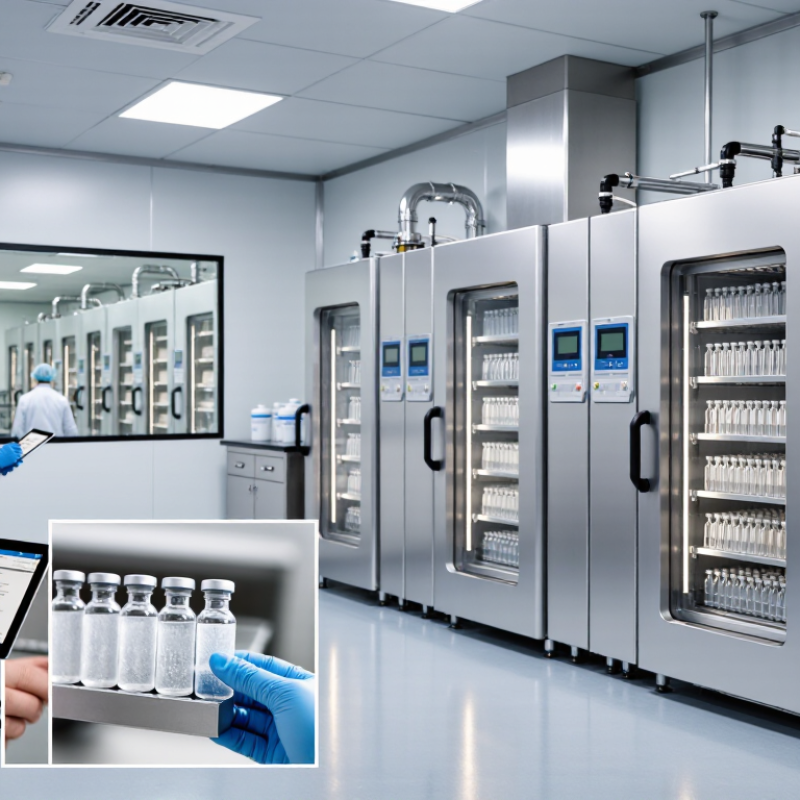
Lyophilization, or freeze-drying, removes water from frozen material through sublimation. The process protects sensitive medicines, diagnostics, enzymes, and biological samples from heat damage. A typical system includes a product chamber, refrigeration unit, vacuum pump, condenser, shelves, and control software. The condenser traps vapor as ice, often at temperatures below -70°C.
The purpose is practical. It can improve storage stability, reduce transport weight, and support reconstitution with sterile water. However, freeze-drying is not simply “freezing plus vacuum.” Product formulation, vial geometry, shelf temperature, chamber pressure, and drying time must work together. Small changes can create collapse, cracking, or uneven residual moisture. That detail is often underestimated.
Industry data shows continued demand. Grand View Research projects strong growth in the global freeze-drying equipment market through 2030, driven by biopharmaceutical manufacturing and diagnostic applications. MarketsandMarkets also identifies automated control, scalable chamber design, and energy efficiency as major technology priorities. These reports support market direction, but their estimates vary because definitions and regional coverage differ.
Core technologies include controlled nucleation, vacuum regulation, condenser optimization, and real-time temperature monitoring. Experienced operators still review the cycle manually. Software helps, but it does not replace judgment. A visually perfect cake may still reconstitute slowly. This is where routine inspection can fail. Reliable equipment therefore needs validated sensors, cleanable surfaces, repeatable heat transfer, and documented maintenance records.
Evaluating lyophilization equipment manufacturers requires more than comparing prices. MarketsandMarkets’ 2024 report estimates the global market will grow from about USD 5.2 billion in 2024 to USD 7.8 billion by 2029. That expansion increases supplier choices, but not necessarily equipment quality.
Start with documented performance. Request uniformity data for shelf temperature, chamber pressure, condenser capacity, and residual moisture. Ask for cycle-development records using products similar to yours. ISPE’s Baseline Guide, Volume 5, emphasizes qualification, control systems, and documented process capability. A reliable manufacturer should support factory testing, installation qualification, operational qualification, and performance qualification.
Service quality often decides long-term value. Check spare-parts availability, remote diagnostics, technician response times, and training depth. Review data-integrity controls against current GMP expectations. Grand View Research reports continued demand for automated freeze-drying systems, partly because manufacturers seek stronger repeatability and production efficiency. Automation helps, but it can also hide poor process assumptions.
I have seen impressive specifications fail during scale-up. A perfect scorecard is unrealistic. Ask how the supplier handled failed cycles, condenser overloads, and slow vacuum recovery. The answer may reveal more than a sales presentation. Compare total ownership cost over ten years, including utilities, validation, software updates, and downtime. Independent references matter. So does a witnessed factory acceptance test.
A practical weighted evaluation model for comparing global lyophilization equipment suppliers. The weighting emphasizes product performance, process control, compliance, lifecycle cost, and service capability rather than brand recognition.
The percentages represent recommended assessment weights in a pharmaceutical equipment procurement review. Buyers should adjust the weighting according to batch size, aseptic processing requirements, regulatory expectations, facility infrastructure, and regional service coverage.
Top Lyophilization Equipment Manufacturers Worldwide
Leading global manufacturers usually specialize by production scale and process complexity. Laboratory equipment makers focus on compact benchtop freeze dryers, often with clear chambers and simple data logging. Their systems support formulation screening, cycle development, and small sample batches. Pilot-scale manufacturers add flexible shelves, stronger vacuum control, and improved condenser capacity. These features help technical teams transfer laboratory cycles toward manufacturing.
Industrial equipment manufacturers concentrate on high-throughput systems for pharmaceutical, biotechnology, food, and advanced materials applications. Their specializations may include sterile loading, automatic stoppering, clean-in-place systems, and integrated process monitoring. Some manufacturers also build custom units for heat-sensitive products or unusual vial formats. Experienced buyers should inspect shelf uniformity, condenser performance, control software, and service response times. A polished interface cannot compensate for unstable vacuum control.
Regional engineering groups often provide strong customization and local installation support. Larger international suppliers may offer standardized platforms, validation documents, remote diagnostics, and global spare-parts networks. Neither approach is automatically better. A smaller supplier might respond faster, but its field-service coverage may be limited. A global supplier may offer extensive documentation, yet customization can take longer than expected.
In practice, equipment selection depends on batch size, formulation behavior, facility standards, and future expansion plans. I would not judge a manufacturer by equipment photographs alone. Factory acceptance testing, operator training, and documented performance data reveal more. Even experienced teams can underestimate cleaning time and maintenance access. That detail deserves closer attention.
Lyophilization systems serve industries where moisture threatens stability, safety, or performance. Pharmaceutical manufacturers use them for injectable medicines, vaccines, peptides, and diagnostic reagents. These systems remove water under controlled vacuum and low temperatures. The process can protect sensitive biological materials from heat damage.
Food and biotechnology companies also depend on freeze-drying equipment. Coffee, fruit, starter cultures, enzymes, and nutritional ingredients can retain their structure after rehydration. In research laboratories, compact units support formulation trials and small-batch development. Operators often compare shelf temperature, chamber pressure, and drying time across several cycles. Small changes matter.
Quality depends on more than equipment size. A system needs reliable sensors, cleanable surfaces, strong vacuum control, and repeatable refrigeration. In sterile production, automated loading and validated cleaning procedures reduce contamination risks. Temperature mapping also helps identify cold spots inside shelves and containers. It is not magic. A short cycle may leave hidden moisture, while an aggressive cycle can damage product structure. Experienced teams review product appearance, residual moisture, reconstitution time, and complete batch records. Some operators still rely too heavily on preset recipes. That can create false confidence. Process knowledge must guide the settings, not replace testing.
| Industry | Typical Products | Primary Lyophilization Applications | Common System Type | Important Process Requirements | Typical Equipment Features |
|---|---|---|---|---|---|
| Pharmaceuticals | Sterile injectables, vaccines, antibiotics, peptides, proteins, and diagnostic reagents | Improving the storage stability of temperature-sensitive drug substances and finished dosage forms | Laboratory, pilot, or production-scale pharmaceutical freeze dryers | Aseptic processing, validated recipes, controlled nucleation, accurate shelf-temperature control, and documented cycle development | Stoppering under vacuum or inert gas, cleanable chambers, sterilization capability, process monitoring, and automated data recording |
| Biotechnology | Monoclonal antibodies, recombinant proteins, enzymes, cell-based materials, and biologics | Stabilizing complex biological molecules that may lose activity during liquid storage | Research and development systems, pilot units, and GMP production systems | Protection of biological activity, control of formulation collapse, low product temperature, and reproducible primary and secondary drying | High-resolution temperature and pressure sensors, product thermocouples, condenser capacity, and scalable cycle-development controls |
| Medical Diagnostics | Immunoassay components, molecular diagnostic reagents, calibrators, controls, and test kits | Extending reagent shelf life and preserving activity during transport and ambient or refrigerated storage | Benchtop and laboratory freeze dryers, with compact production systems for higher demand | Uniform drying of small fill volumes, protection of assay performance, moisture control, and repeatable reconstitution | Small-vial handling, flexible shelf arrangements, recipe management, vacuum control, and low-volume process monitoring |
| Food and Beverages | Coffee, fruits, vegetables, dairy ingredients, meat, seafood, herbs, and ready-to-eat meals | Removing water while retaining flavor, aroma, color, structure, and nutritional characteristics | Pilot and industrial food freeze-drying systems, including tray and continuous configurations | Product geometry, load distribution, energy efficiency, moisture uniformity, and protection against oxidation | Large product chambers, efficient refrigeration, food-grade construction, shelf or tray loading, and simplified cleaning access |
| Nutraceuticals | Probiotics, vitamins, botanical extracts, enzymes, and functional ingredients | Preserving potency and improving the stability of ingredients that are sensitive to heat or moisture | Laboratory, pilot, and medium-scale production freeze dryers | Low-temperature processing, oxygen and moisture management, protection of live cultures, and consistent powder quality | Adjustable shelf temperatures, controlled vacuum, condensers suitable for the formulation, and hygienic product-contact surfaces |
| Advanced Materials and Chemicals | Nanomaterials, catalysts, polymers, ceramic precursors, specialty chemicals, and porous materials | Drying materials that require preservation of particle structure, porosity, dispersion, or chemical properties | R&D freeze dryers, manifold systems, and customized industrial units | Solvent compatibility, controlled ice or solvent sublimation, prevention of aggregation, and safe handling of process vapors | Solvent-resistant components where required, configurable vacuum systems, specialized condensers, and flexible chamber designs |
| Cosmetics and Personal Care | Active botanical ingredients, specialty powders, serums, masks, and sensitive formulations | Producing lightweight, porous, and easily reconstituted ingredients or finished products | Laboratory and pilot-scale systems, with production units for specialty products | Preservation of active ingredients, appearance, texture, fragrance, and rehydration behavior | Precise vacuum control, flexible shelf programming, small-batch handling, and hygienic surfaces |
| Research and Academia | Formulations, microorganisms, tissues, reference materials, and experimental compounds | Developing formulations, studying drying behavior, and testing product stability before scale-up | Benchtop, manifold, and pilot freeze-drying systems | Flexible operating conditions, reliable data collection, small sample volumes, and repeatable experimental control | Interchangeable manifolds, programmable shelves, vacuum measurement, data logging, and multiple vial or container formats |
| Agriculture and Biological Preservation | Microbial cultures, plant tissues, seeds, biological inoculants, and veterinary materials | Maintaining viability or biological activity during long-term storage and distribution | Laboratory and pilot systems, with specialized production units for biological materials | Controlled freezing, protection from excessive dehydration, viable-cell recovery, and stable residual moisture | Accurate temperature measurement, programmable cycles, suitable condenser performance, and controlled reconstitution testing |
The worldwide lyophilization equipment market is expanding with biologics, vaccines, and temperature-sensitive therapies. MarketsandMarkets estimates growth from about USD 3.2 billion in 2024 to USD 4.7 billion by 2029, representing an 8.2% compound annual growth rate. Equipment manufacturers are responding with modular systems, automated loading, and improved condenser performance. Energy use remains a concern. A faster cycle is not always a better cycle.
Selection should begin with product behavior, not brochure claims. Buyers should compare shelf temperature control, chamber pressure stability, condenser capacity, and vacuum leak rates. Data integrity also matters. Audit trails, electronic batch records, and validated control software support regulated production. ISPE guidance emphasizes risk-based qualification, including design, installation, operation, and performance checks. Requesting factory acceptance test records can reveal practical weaknesses before shipment. It is an unglamorous step.
Future development will focus on continuous or semi-continuous freeze-drying, process analytical technology, and machine-learning-assisted cycle design. Grand View Research identifies automation and pharmaceutical demand as major growth drivers through 2030. However, artificial intelligence still depends on clean historical data. Many facilities lack consistent cycle records. That limitation deserves more attention. Manufacturers offering remote diagnostics, lower refrigerant impact, and scalable pilot-to-production platforms may gain stronger credibility. Buyers should also assess technician training, spare-part availability, cybersecurity, and local service response. The cheapest quotation can become expensive beside an idle chamber.